Male or Female Cows for Beef
Beef has been a home favorite and a staple meal for generations of families every twenty-four hour period across the globe.
Near beefiness comes from countries like China, United states of america, and Brazil. Most farmed cattle brand up the regular beef supply.
The beef industry is a roaring, busy, and in-demand product industry. Being producers of staple food for more than half of America'south population, not just for milk but likewise for meat, can be pretty challenging for animals. The diverseness of breeds of cows and cattle, young and old, specifically grass-fed cattle, are bred on pastures and later slaughtered to produce a multifariousness of types of beef. One is ground beefiness, which comes from cows and is a finely chopped beef that's primarily used in hamburgers and other snack items.
Beef provides an array of fantabulous nutritional and health benefits. Beef is an excellent source of fat, amino acids, and protein as well. Ranchers who own cattle breeds are responsible for how well beef cuts turn out. The breeding and feeding of the herd is a crucial chemical element. Cattle raised in the correct ecology conditions, such as pasture-raised or grass-fed, with acceptable grain and plant content in their diet yield amend operation and meat than those raised in an incompetent surround such every bit that of industrially farmed beefiness.
Most of usa have looked at beef on a grocery shop shelf and forgotten about its where it's produced every bit before long as it's in our shopping bag. Some people even believe that the store is the source of beef as opposed to the geographic area in which the cattle are raised to produce beef. Permit's articulate the defoliation and get to the bottom of what beef is and how information technology reaches our dinner plates.
We take a lot in shop for you, and then don't stop here! Continue reading nigh where does brisket come from? And where does feta cheese come from? For more fun and interesting facts!
What is corned beef, and where does corned beef come from?
A particular notion associated with beef is that it comes but through cows. Beefiness, however, is the culinary name for meat from cattle, in the sense that beef comes from cattle apart from cows as well as the bull.
Beefiness is reared from male and female person cattle. However, the females remain heifers and are continuously breeding to produce calves for dairy and to go slaughtered for meat. In prehistoric times, humans hunted animal breeds similar aurochs, a large wild cattle, and later domesticated them. Numerous animals have since been used on-farm to produce various kinds of meat, and dairy. Today beefiness production is the third-largest worldwide industrial subcontract production after poultry and pork. In Australia alone, New South Wales and Queensland account for 69% of beefiness product. The process by which a cattle turns to beef is an interesting ane. Once born, after 2-8 months, the herd of grass-fed cattle is sent to exist fed on grass or pasture, where 25% of the cattle remain until they are slaughtered. This too includes a scattering of young milk-fed calves, some of which are also sent to pasture to eat grass. These calves are given milk and are grain-fed to produce veal meat. 75% of other animals travel to the feedlot or areas where aplenty grain feed is bachelor until harvest. Later 12-24 months, cattle such as cows and bulls are harvested and sent to the local retailer from where we buy our favorite kind of beef.
Corned beefiness is another relatively inexpensive variation of beef. Information technology is a brisket cut obtained from the forepart of a cow and is one of the largest pieces obtained from the cow, peculiarly the lower chest or breast of beef cattle. The beefiness brisket is the cut used to make corned beefiness, and thus, it's a tough cut with connective tissues throughout. The weight of this meat typically comes effectually x lbs (4.53 kg).
Corned beef tastes astonishing when cured in alkali using rock salt and corns of common salt, especially when cooked slowly. This helps the beefiness to turn into a tough, tender, and flavorful meat.
What is roast beefiness, and where does roast beef come up from?
Beefiness comes in a wide variety to be eaten, and 1 delicious kind is roast beef; as the name suggests, it's beef that is roasted and has been a part of numerous diet regimes for a long time.
Roasted beefiness is a dish wherein the leftovers from your master meal could be used in hash or sandwiches too. You would also find roasted beef equally a part of Sunday lunch or dinner as Yorkshire pudding in countries similar Canada, Republic of ireland, U.Southward, South Africa, United kingdom, Australia, and New Zealand. You could employ most any cutting of meat while preparing roasted meat, and the nutrient in which roasted beef is used is diverse, ranging from sandwiches, chuck roast, and sirloin roast to a regular tender roasted beefiness.
Roasts are obtained from the shoulder, rib, steer's chuck, and loin areas from the cattle. Nowadays, the leg, butt, back and chest. In fact, did you know that the nearly expensive and tender roasts are obtained from parts of cattle that have the slightest movement, such equally the tenderloin or their rib's coast? Conversely, the tougher roasts come up from those parts that get exercised more regularly in cattle.
What is jerky beef, and where does beef jerky come from?
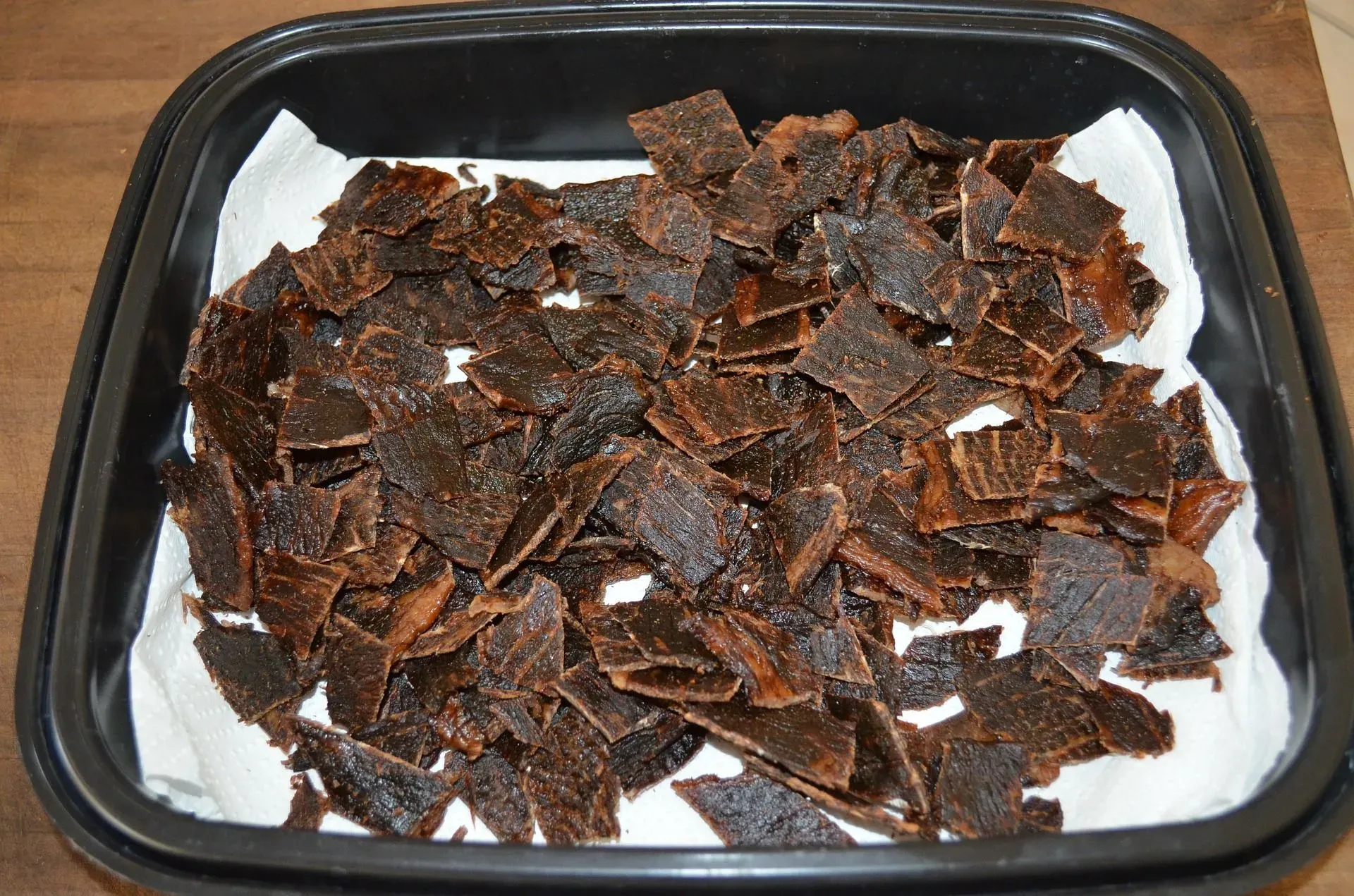
Hasty beef is every bit interesting a food item to swallow as it sounds. Beefiness jerky is essentially one of the snack nutrient items mainly produced by the beef manufacture.
Jerky beef is made past marinating the beef in a curing solution and drying it. This process gives it longer shelf life. Although the producers of jerky beefiness are the cows, the native population from the U.S were the starting time ones to initiate this meat processing engineering to preserve fauna meat for a longer elapsing.
More tasty facts about this pop dried animal snack are that the lean trimmed meat is cut into strips and cooked in the dry heat of an oven. This process of many restaurants offer this roasted beef includes seasoned spice rub along with the drying functioning. The addition of salt prevents spoilage of this repast, which makes it unlike from steak, which is some other type of meat that is obtained from muscle fibers of bulls. Cow, calf, and other ages of cattle are usually nowadays on a farm. Steak tin include a bone and are thick slices of meat cooked quickly on a grill at loftier temperatures, whereas roasted beef is prepared as hasty from a low-temperature drying method. Another difference is the long preservation duration of roasted beef in contrast with the preservation duration of the steak.
The cow is again the popular option for obtaining this type of beef along with calves, bulls, and other cattle. Information technology is readily available at whatever convenience store, gas station, or supermarket in the U.Due south, Canada, or Mexico.
What do you mean by Wagyu beef and where does Wagyu beef come up from?
Wagyu beef comes from Japanese breeds of cattle. An interesting and fun fact, is that the name Wagyu is derived from 'Wa', significant Japanese, and 'gyu' meaning cow. Wagyu were draft animals used extensively in agriculture due to their physical capabilities.
Wagyu beef comes from Wagyu cattle. These cattle are quite expert in their health, build, and are readily adaptable to various climatic weather condition. The cattle are besides very fertile, with most females getting mature before 12 months of historic period! Surprisingly fast, right? A balderdash is also a source of Wagyu beef.
Hither at Kidadl, we have carefully created lots of interesting family-friendly facts for everyone to enjoy! If y'all liked our suggestions forwhere does beefiness come from? Does beef come from cows or bulls? Then why not take a look at meal facts for kids, how often should I eat throughout the day? Or do you know how to get gum out of hair? Know the play tricks.
Source: https://kidadl.com/fun-facts/where-does-beef-come-from-does-beef-come-from-cows-or-bulls

Post a Comment for "Male or Female Cows for Beef"